Blog
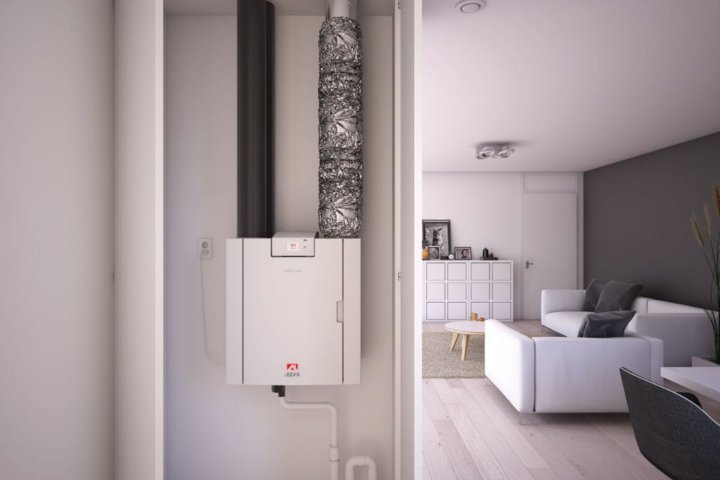
Why should I maintain my Mechanical Ventilation system regularly?
A ventilation system works day and night, year after year, and what people may not realise is that without regular maintenance, dust, grease, and moisture accumulate. The result? Poorer air quality, higher energy consumption, and faster wear and tear on the unit.
To protect your health and ensure good airflow, it's best not to postpone maintenance for too long. This is the only way to maintain high efficiency , enjoy lower energy bills , and ensure your ventilation system lasts the expected 15 years.
What happens if I don’t check and clean my MVHR system regularly?
Delaying maintenance on your ventilation system can lead to several problems throughout your home. Some of the most common consequences include:
- Poor indoor air quality caused by clogged or dirty filters
- Increased noise as fans begin to vibrate or work harder than normal
- A higher risk of system faults or breakdowns
- Increased energy consumption and higher running costs
- Polluted air ducts due to a build-up of dust and debris
- The spread of dust, allergens and mould spores throughout the property
- Potential leaks or moisture damage within the system
Regular inspection and cleaning help prevent these issues and keep your ventilation system operating efficiently.
Why standard maintenance may not always be enough for Heat recovery systems?
General maintenance guidelines are a good starting point, but every home and building is different. Your environment and daily habits can significantly affect how quickly a ventilation system becomes dirty or contaminated.
Some factors that can influence how often maintenance is required include:
- Living in a busy urban area with heavy traffic pollution
- Pets that shed large amounts of hair or dander
- Smoking indoors
- Cooking without using the extractor hood
- Living in a rural area with high levels of pollen
In these situations, filters and ventilation valves can become clogged more quickly. It’s important to check them more frequently and replace them as soon as they become saturated.
Doing so will help maintain healthy indoor air quality and ensure your ventilation system continues to run efficiently.
Filter maintenance—every 6 months
- Replace filters (or clean them if they are re-usable) to prevent restricted airflow and poor indoor air quality. New filters are typically white; over time they will turn grey, and if left unchanged, black. Heavily soiled filters will significantly reduce MVHR performance by restricting airflow and, in most cases, will cause the fans to increase speed to compensate for the blockage.
- Filter cleaning methods vary depending on filter type and grade, which can range from coarse to fine. In most cases, a light wipe with a damp cloth followed by gentle vacuuming is sufficient.
- The construction of the filter determines the appropriate cleaning method. Filters with a paper core should not be cleaned with a damp cloth, as moisture can soften and damage the paper. Filters made from more robust, wool-like materials can tolerate light wiping and vacuuming.
Deep Cleaning (Annual / Bi-Annual)
Heat Exchanger:
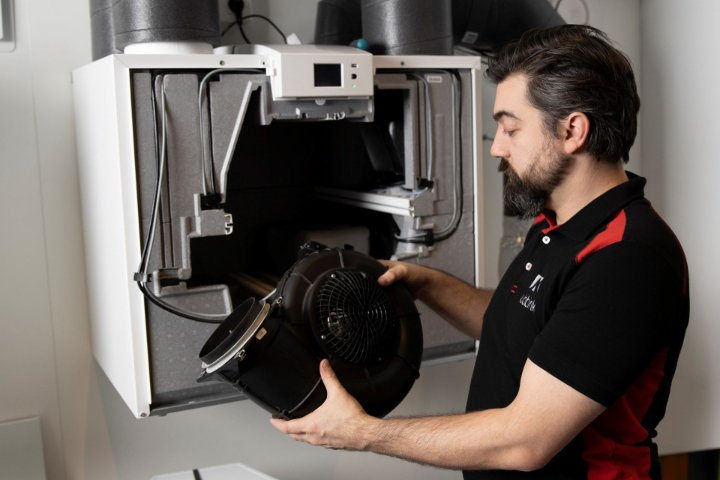
Remove and clean the heat exchanger core to maintain efficient heat transfer. The core may be rinsed through with water to ensure the internal plates are free from dirt and debris.
Fans & Motors:
Clean the fan impellers and check for noise, wear, or damage. Adequate access is required; in some cases, removal of the heat exchanger is necessary to expose the fan assemblies.
Internal Components:
Clean the internal casing of the unit to remove any accumulated dust or debris.

System Checks
Condensate Trap / Drain:
Inspect and clean the condensate trap and drain to ensure it is free from blockages and to prevent leaks.
Airflow Rates:
Measure and balance airflow at all supply and extract terminals to ensure correct system performance. This is particularly important if valves have been removed for cleaning or if the internal rotational sections have been adjusted.
External Vents:
Clear any debris from the external air intake and exhaust vents.
Fly screens or guards are sometimes fitted to intake terminals; if present, these must be cleaned regularly, as they can become blocked over time and cause system issues.
Controls & Diagnostics
Check and calibrate sensors as required and confirm correct operation of the bypass valve.
Airtightness
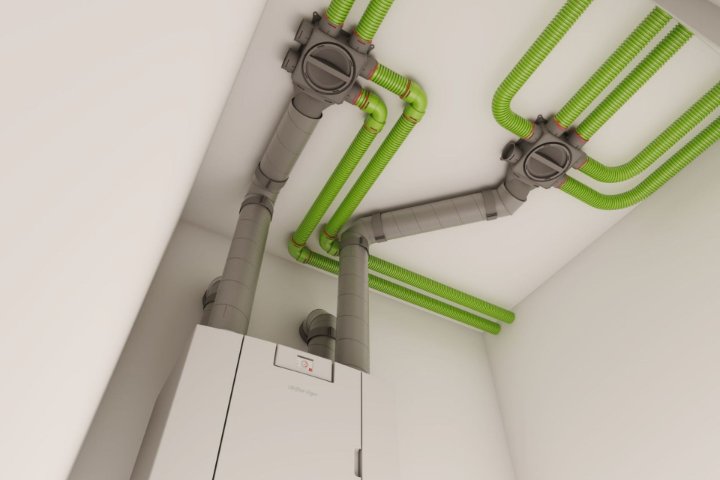
Inspect all duct connections above and below the unit. Check for air leaks, loose clips, damaged connectors, or peeling tape.
Noise
Listen for abnormal noises such as rattling, whistling, rumbling, or any sounds outside of normal operation.
Manuals & Documentation
Always refer to the manufacturer’s manuals and service documentation. These provide unit-specific guidance on required checks and maintenance procedures and should be followed at all times.


