

Regulations
Balanced ventilation for airtight and energy-efficient homes
Modern residential buildings are increasingly airtight to meet energy performance requirements. In these conditions, natural ventilation is no longer sufficient to maintain indoor air quality or control humidity. Mechanical ventilation with heat recovery (MVHR) provides a controlled and energy-efficient solution by ensuring continuous air renewal while limiting heat losses.
MVHR systems enable a balanced indoor climate by supplying fresh air and extracting stale air in a controlled way, supporting both occupant comfort and building performance.
How MVHR systems work
Designed as a whole-house solution, MVHR ensures that every room benefits from a consistent and controlled indoor climate. The system operate with two continuous airflows:
- Fresh outdoor air is supplied to living spaces such as living rooms and bedrooms
- Stale, humid air is extracted from wet rooms such as kitchens, bathrooms and toilets
At the core of the system, a heat exchanger transfers heat from the outgoing air to the incoming fresh air. This allows ventilation without significant energy loss, while maintaining a comfortable indoor temperature.
Integrated filtration further improves indoor air quality by reducing the presence of outdoor pollutants and allergens.
Learn how airflow can be further optimized with Demand-controlled mechanical ventilation.


When MVHR is the right solution
In airtight homes, natural ventilation is no longer sufficient. MVHR provides a reliable and controlled alternative that improves both living comfort and building performance.
MVHR systems are particularly suitable for:
- Airtight and low-energy residential buildings
- New build projects with high energy performance targets
- Homes where both indoor air quality and energy efficiency are key requirements
They are commonly used in low-energy and passive house designs, where controlled ventilation is essential to overall building performance.
For renovation or simpler systems, see the Mechanical extract ventilation solution.
A complete system approach
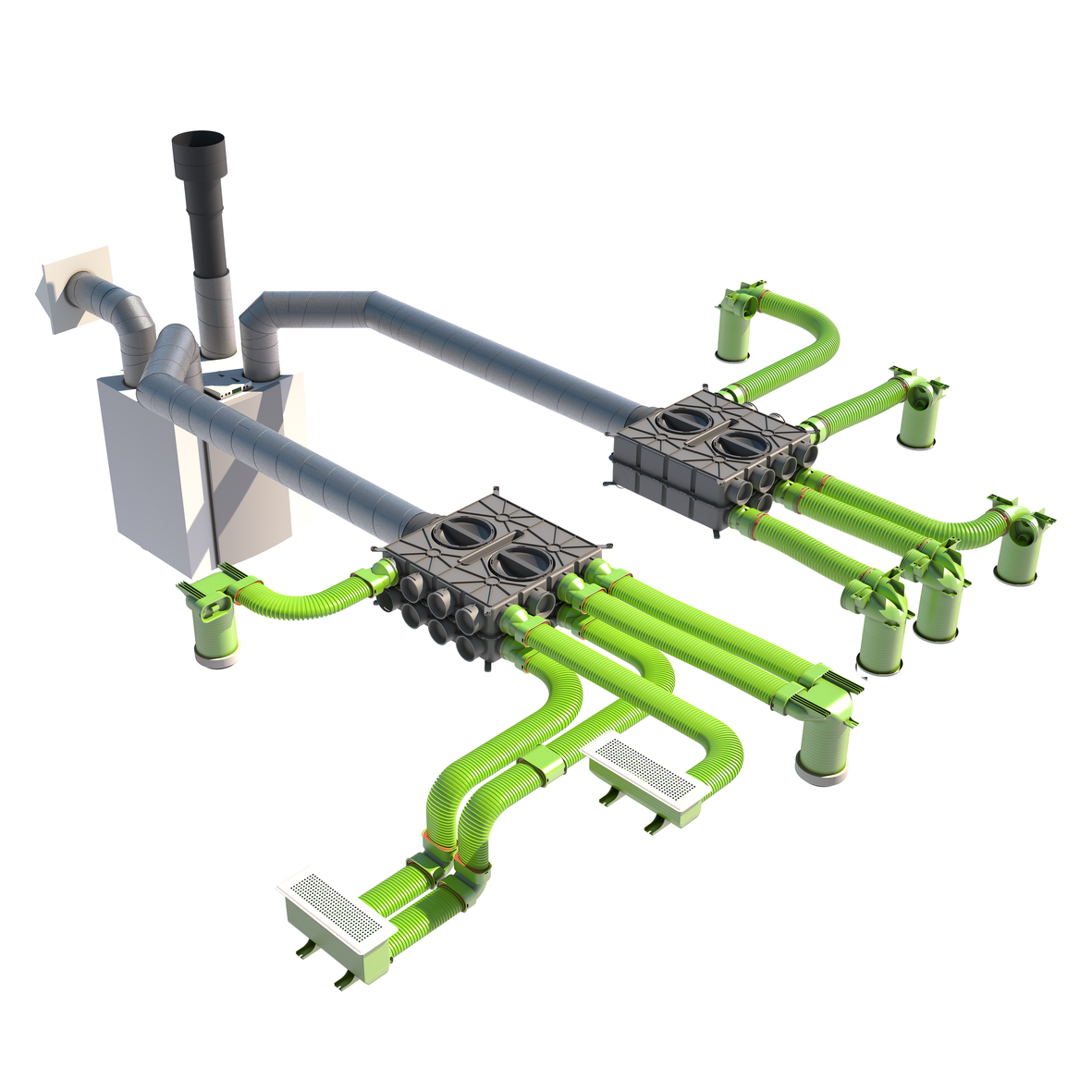
Ubbink delivers MVHR as a complete system, where all components are designed to work together efficiently. The system includes:
- Air distribution with the Air Excellent system, designed for low air resistance and flexible installation
- Aerfoam insulated ducts to reduce heat loss and limit the risk of condensation
- Roof and wall terminals for air intake and exhaust while ensuring airtight, and watertight connections
- Ubiflux ventilation unites
- Supply and extract valves to regulates and evenly distributes airflow
The components are designed to connect directly to each other, which supports a straightforward installation process , ensures airtightness, and maintains consistent system performance over time.
Download the ventilation brochure for detailed system information

Suitable for a wide range of residential applications
Suitable for both new build and renovation projects, Ubbink MVHR systems can be adapted to a wide range of housing types and climates. Their modular design allows flexibility in design and installation, supporting residential projects across international markets.
See how MVHR is applied in practice in our Projects and case studies
